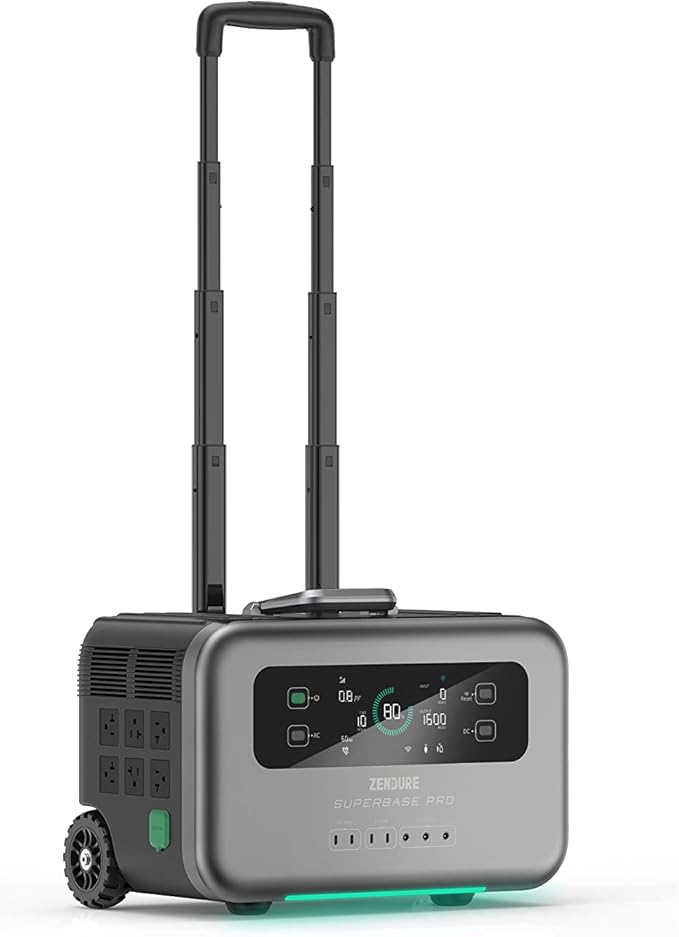
Choosing between the ecoflow river 3 plus vs jackery 300 plus tent camping setup comes down to three things: power output, charging speed, and tent-friendly weight. The EcoFlow RIVER 3 Plus packs 286Wh of LiFePO4 capacity with up to 1200W X-Boost AC output and a sub-1-hour wall recharge. The Jackery Explorer 300 Plus offers 288Wh with 300W continuous AC (600W surge) and roughly two-hour recharging. For most tent campers running a CPAP, mini fridge, LED lights, and a few phones, the River 3 Plus wins on raw output; the Jackery 300 Plus wins on plug-and-play simplicity and slightly lower weight.
At-a-Glance Comparison: River 3 Plus vs Jackery 300 Plus
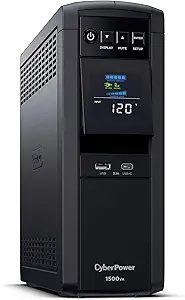
CyberPower CP1500PFCLCD PFC Sinewave UPS Battery Backup and Surge Protector, 1500VA/1000W, 12 Outlets, AVR, Mini Tower, UL Certified
- 1500VA / 1000W pure sine wave inverter
- LCD panel with real-time power status
- Multi-bank surge protection, 12 outlets
Top Picks
| Spec | EcoFlow RIVER 3 Plus | Jackery Explorer 300 Plus |
|---|---|---|
| Battery Capacity | 286Wh LiFePO4 | 288Wh LiFePO4 |
| AC Output (Continuous) | 600W (1200W X-Boost) | 300W (600W Surge) |
| AC Outlets | 2 | 1 |
| USB-C PD | 100W | 100W |
| Max Solar Input | 220W | 100W |
| Wall Recharge Time | ~60 minutes | ~2 hours |
| Weight | ~9.9 lb (4.5 kg) | ~8.27 lb (3.75 kg) |
| Cycle Life | 3,000+ cycles to 80% | 2,000+ cycles to 80% |
| App Control | Wi-Fi + Bluetooth | Bluetooth only |
| Warranty | 5 years | 5 years |
Capacity and Battery Chemistry: Practically Identical
Both units sit in the 285-290Wh "weekender" tier, and both use LiFePO4 (lithium iron phosphate) chemistry. That's the big upgrade story in 2026: LiFePO4 cells deliver 2,000-3,000+ cycles to 80% capacity, versus the 500-800 cycles of older NMC packs. In tent-camping terms, you can recharge either of these power stations every weekend for a decade and still have meaningful capacity left.
The EcoFlow RIVER 3 Plus edges ahead with 3,000+ rated cycles versus Jackery's 2,000+, but in practice both will outlast the cooler, headlamp, and inflatable mattress you carry alongside them. Capacity-wise the 2Wh difference is meaningless—you're looking at the same realistic energy budget: roughly one night for a 12V fridge plus phones, or 4-6 nights of a CPAP without humidifier, or about 40-50 charges of a modern smartphone.
When shopping for ecoflow river 3 plus vs jackery 300 plus tent camping, it pays to compare specs, capacity, and real-world runtime before committing.
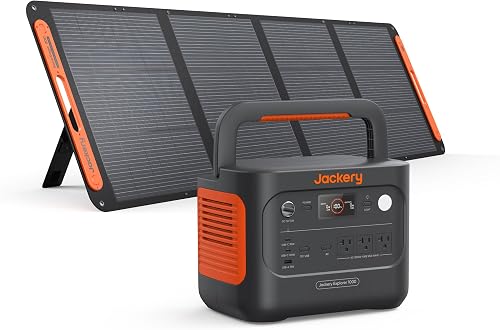
Jackery Solar Generator 1000 v2 with 200W Solar Panel,1070Wh Portable Power Station LiFePO4 Battery,1500W AC/100W USB-C Output, 1Hr Fast Charge for Outdoor,Off-Grid Living,RV,Emergency
- 1264Wh station + 200W SolarSaga panel
- Ready-to-use solar generator kit
- Expandable to 5kWh with extra batteries
AC Output: Why 1200W vs 300W Matters in a Tent
This is where the two diverge sharply. The Jackery 300 Plus tops out at 300W continuous (600W surge), which covers small electronics, LED lights, a CPAP, and laptop charging—but won't run a kettle, induction burner, hair dryer, or coffee maker. The EcoFlow RIVER 3 Plus offers 600W native AC, and its X-Boost technology pushes that to 1200W for resistive loads like a small kettle (around 800W), a heat pad, or a portable espresso maker.
For tent campers who like a hot cup of coffee at sunrise without firing up a propane stove, the River 3 Plus is the only one of the two that can drive a 1000W travel kettle. Just remember that boiling water uses a lot of energy: a single 800W kettle cycle for two minutes pulls about 27Wh, or roughly 10% of either battery's total capacity. Use sparingly.
Charging Speed and Solar Compatibility
EcoFlow's GaN-based X-Stream charging refills the RIVER 3 Plus from 0% to 100% in roughly 60 minutes from a standard AC wall outlet. The Jackery 300 Plus uses traditional charging and needs about 2 hours from a wall. If you typically top up at a campground bathhouse outlet during a quick shower, the EcoFlow gives you twice the breathing room.
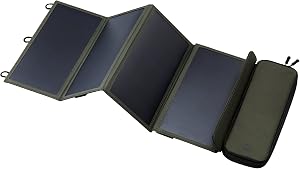
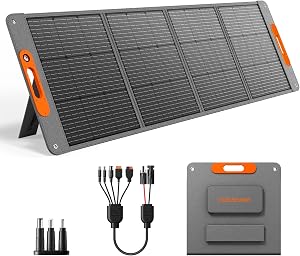
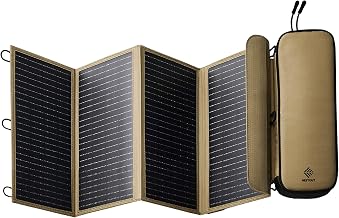
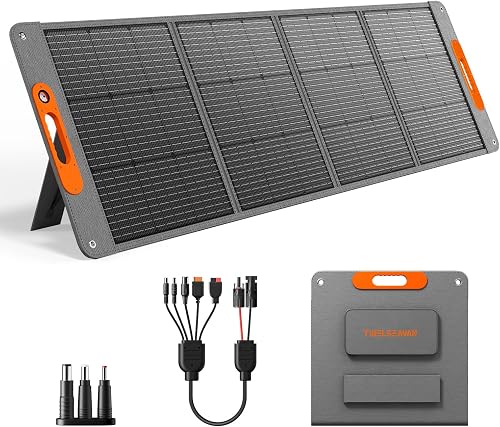
Solar input is the more important spec for off-grid tent camping. The RIVER 3 Plus accepts up to 220W of solar (11-30V), so a 200W folding panel will refill it from empty in roughly 1.5-2 hours of strong midday sun. The Jackery 300 Plus is capped at 100W solar, meaning even with a 100W panel you're looking at 4-5 hours of direct sun for a full recharge. If you're pairing portable solar panels for tent camping, the EcoFlow's higher input ceiling lets you scale up later without replacing the station.
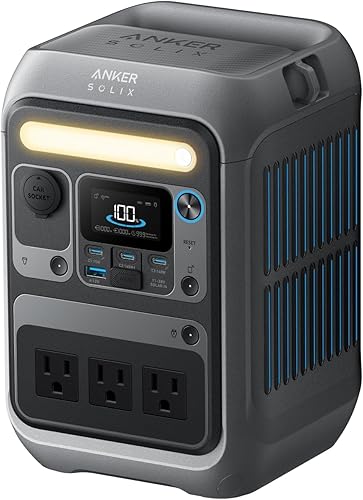
Anker Portable Power Station SOLIX C300, 288Wh LiFePO4 Backup Battery, 300W Solar Generator, 140W Two-Way Fast Charging, for Camping, Hunting, Travel, Blackout & Emergencies (Solar Panel Optional)
- 288Wh LFP battery
- 300W output with fast USB-C PD
- Weighs only 7.7 lbs
Weight, Size, and Tent Footprint
Both units are tent-portable. The Jackery 300 Plus weighs 8.27 lb (3.75 kg) and measures roughly 9 × 6 × 6 inches—small enough to wedge into the vestibule of a two-person backpacking tent. The RIVER 3 Plus is slightly larger and heavier at 9.9 lb (4.5 kg) and about 10 × 8.5 × 5.4 inches. Neither is a backpack-it-in-miles power station, but both will travel comfortably from your car to a walk-in tent site.
The Jackery's narrower, more upright form factor sits flatter against a tent wall; the EcoFlow's wider footprint is more stable on uneven ground but takes more floor space inside a smaller tent.
Noise, Fan Behavior, and Sleep Comfort
This is the underrated tent-camping spec. Inside a quiet tent, fan noise can wake you up. The Jackery 300 Plus runs nearly silent under loads below 100W—most CPAP machines, phone charging, and LED lighting won't trigger its fan at all. The EcoFlow RIVER 3 Plus has more aggressive thermal management because of its higher output ceiling, and you'll hear the fan kick on when you're pushing 300W+ through it. At CPAP-only overnight loads (typically 30-60W), both are essentially silent.
If your only nighttime load is a CPAP, either works. If you're running a 12V fridge that cycles a compressor every 20 minutes, the EcoFlow may run its fan briefly during each cycle—worth knowing if you're a light sleeper.
App Control and Smart Features
The EcoFlow app is the more mature of the two ecosystems in 2026. The RIVER 3 Plus connects via both Wi-Fi (at home or on a hotspot) and Bluetooth (in the field), letting you monitor watts in/out, schedule charge limits to extend battery life, and toggle X-Boost remotely. The Jackery 300 Plus uses Bluetooth only, which is fine inside a tent but loses the ability to check the station remotely from outside the campsite.
Both apps now support charge-limit scheduling, which is useful for tent campers storing the unit between trips—keeping the battery at 60-80% rather than 100% will materially extend useful life over 5+ years of ownership.
Real-World Tent Camping Scenarios
When weighing the ecoflow river 3 plus vs jackery 300 plus tent camping use cases, your load profile matters more than the spec sheet. Here's how the two stack up across common setups:
Weekend car camping with a CPAP and phones: Either unit handles this easily. A typical CPAP without humidifier pulls 30-40W and will run 6-7 hours on either battery, leaving plenty for morning phone charging. The Jackery's lower weight and silent operation make it a slight winner here.
Three-day trip with a small 12V cooler: A 40-quart 12V compressor cooler averages ~35W when cycling. Either station can run it for about 7-8 hours unassisted—neither is enough for 72 hours without solar. Add a 100W panel and the EcoFlow's 220W input ceiling lets you upgrade to a 200W panel later for true off-grid operation.
Family camping with a coffee maker: Only the EcoFlow RIVER 3 Plus can run an 800-1000W appliance via X-Boost. If morning coffee from a 1000W drip maker is non-negotiable, the Jackery 300 Plus is out and the River 3 Plus is in.
Backpacking to a tent site: Neither is truly backpack-friendly past a mile or two, but the Jackery's lower weight wins by a small margin. For real backpacking, look at the smaller EcoFlow RIVER 3 (245Wh) instead.
Our Picks for Tent Camping in 2026
Best Overall: EcoFlow RIVER 3 Plus
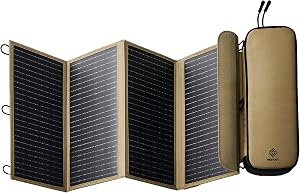
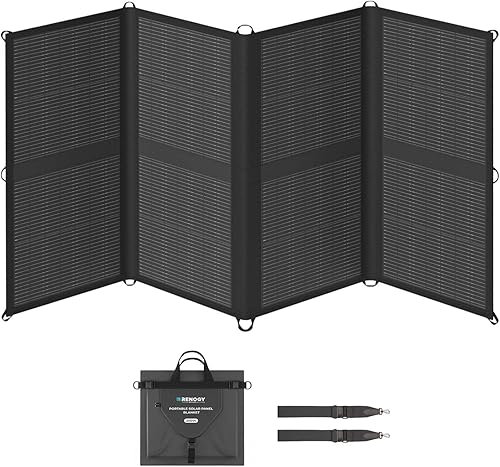
The RIVER 3 Plus is our top pick for most tent campers in 2026. It charges twice as fast as the Jackery, doubles the solar input, runs higher-wattage appliances via X-Boost, and offers Wi-Fi monitoring on top of Bluetooth. The 1.6 lb weight penalty is a fair trade for the flexibility. Check current price: Renogy 200W Portable Solar Panel for Power Stations.
Ultralight Alternative: EcoFlow RIVER 3
If you want a smaller, lighter station for solo or two-person tent camping where you're carrying gear short distances, the standard RIVER 3 (245Wh, ~7.7 lb) is the smarter buy. It still gives you 600W X-Boost output and 1-hour wall recharge—you're just trading ~40Wh of capacity for a more compact footprint. See it here: EcoFlow RIVER 3 Portable Power Station.
Step Up for Multi-Day Trips: EcoFlow RIVER 2 Max
If you're regularly camping 3+ nights or running a 12V fridge continuously, jump to the RIVER 2 Max (499Wh). It nearly doubles capacity, still recharges in about an hour, and adds enough overhead to run a CPAP with humidifier plus a fridge through a long weekend. Check it here: EcoFlow RIVER 2 Max Portable Power Station.
Power-Hungry Tent Setups: EcoFlow RIVER 2 Pro
For families running coffee makers, electric blankets, or extended off-grid stretches, the RIVER 2 Pro (716Wh, 800W AC) is the workhorse choice. It's still tent-portable and recharges in 70 minutes from a wall outlet. See current pricing: EcoFlow RIVER 2 Pro Portable Power Station.
Frequently Asked Questions
Can the EcoFlow RIVER 3 Plus run a CPAP all night while tent camping?
Yes. A typical CPAP without humidifier draws 30-40W, so the RIVER 3 Plus delivers roughly 6-8 hours on a single charge. To extend runtime, disable the humidifier (it can triple draw), use the manufacturer's DC adapter if available, and run the CPAP without heated tubing. For more, see our guide to the best power station for CPAP camping.
Is the Jackery 300 Plus quieter than the River 3 Plus inside a tent?
At light loads (under 100W) both are effectively silent. Once you push 200W+ through either unit, the EcoFlow's fan engages sooner and more aggressively because of its higher output ceiling. For pure CPAP and phone duty inside a tent at night, you won't notice a difference between the two.
Which charges faster from a 100W solar panel for tent camping?
Both will accept a full 100W from a single panel, so wall-clock time to refill is similar—roughly 3.5-4.5 hours of strong sun for either. The difference is scalability: the RIVER 3 Plus accepts up to 220W of solar input, so you can add a second 100W panel and cut charge time roughly in half. The Jackery 300 Plus is capped at 100W.
Can either power station run a 12V car fridge overnight while tent camping?
Yes, with caveats. A 40-quart compressor fridge averages 30-40W with the compressor cycling. Both units provide 7-9 hours of fridge runtime on a full charge. For two nights without solar recharge, you need a larger station like the EcoFlow RIVER 2 Max (499Wh) or RIVER 2 Pro (716Wh).
Is the River 3 Plus safe to leave plugged in inside a tent during rain?
Neither the RIVER 3 Plus nor the Jackery 300 Plus has an IP rain rating—both must stay dry. Inside a properly pitched, dry tent they're safe to operate. Never leave either outside under a tarp where condensation or splash-back can reach the ports, and always disconnect solar panels at the input before unplugging from the station to avoid arcing.
How long does the EcoFlow RIVER 3 Plus take to charge from a 12V car outlet?
The RIVER 3 Plus accepts up to 100W from a 12V car port using EcoFlow's car charging cable, refilling in roughly 3-3.5 hours of driving. The Jackery 300 Plus is similar at ~3.5-4 hours. If you regularly relocate between campsites, top up while driving and you'll rarely run out.
Which has better cold-weather performance for shoulder-season tent camping?
Both use LiFePO4 chemistry, which loses 10-20% effective capacity below freezing but is safer and longer-lived than NMC. Discharge works down to -10°C (14°F) on both. Charging in below-freezing temperatures damages either battery—keep the unit inside the tent or insulated cooler overnight in the shoulder season. See our breakdown of LiFePO4 vs lithium-ion power stations for more detail on cold-weather behavior.
Key Takeaways
- Choosing the right ecoflow river 3 plus vs jackery 300 plus tent camping means matching the key features to your specific needs and budget
- Read real customer reviews and check the return policy before you commit
- Also covers: river 3 plus jackery 300 plus comparison
- Also covers: best small power station tent
- Also covers: river 3 vs jackery 300 weight
- Compare value across models — the priciest option is not always the best fit